
A dependable termination tool saves rework in a crowded electrical panel, on a battery installation, or behind a wall-mounted television. These six picks cover primary-wire stripping, battery lugs, Ethernet connections, coaxial cable, and larger hydraulic crimping work. Match the tool to the conductor, connector, and gauge rather than treating every crimp as the same job.
The Choices Worth Comparing
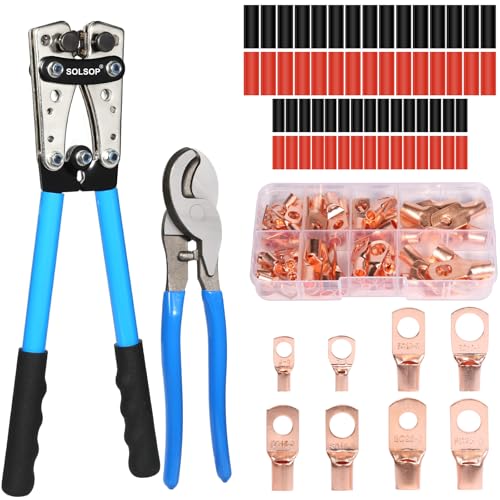
Solsop Battery Cable Crimper Tool, AWG 10-1/0, 62-Piece Lug Kit

IDEAL Electrical 45-918 Reflex T-Stripper, 6-16 AWG

Solsop Pass-Through RJ45 Crimp Tool Kit
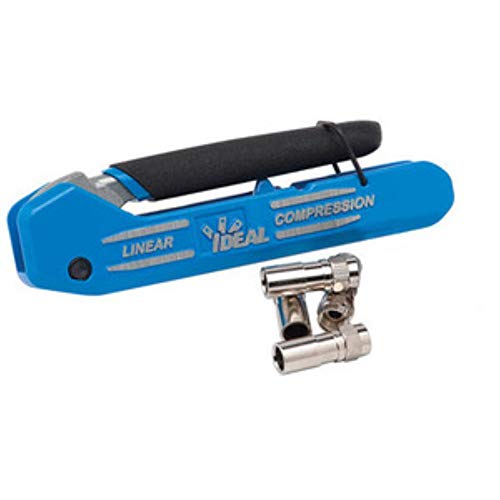
IDEAL 33-632 LinearX3 Coax Compression Tool

Solsop Pass-Through RJ45 Crimp Tool Kit

Solsop 10-Ton Hydraulic Crimper with Nine Hex Dies
What Each Pick Brings To The Table
Vehicle electrical work often turns on a handful of clean battery or solar terminations. This Solsop crimper covers AWG 10 through 1/0 wire with six selectable hexagonal dies, giving garage installers a broad fit without a separate tool for each gauge.
The rotating head simplifies size changes, while the included cable cutter and 62-piece lug and tubing assortment make it more useful for project assembly. For lighter network cabling, the Solsop Pass-Through RJ45 Crimp Tool Kit is the more focused choice.
Notable Upsides
- Six dies cover common battery, power, and solar cable sizes.
- The rotating head keeps loose dies out of the work area.
- Copper lugs and heat-shrink tubing support a complete termination setup.
- A built-in cutter helps shorten the workflow during battery work.
Things To Consider
- The 10 AWG floor excludes lighter signal and control wire.
- Owners should keep the hexagonal dies clean of metal filings to protect the crimping surfaces.
Quick Facts
Built With In Mind
You benefit most from this kit during battery restoration, solar wiring, or heavier automotive electrical projects.
Where Another Pick Shines
Choose the IDEAL Electrical 45-918 Reflex T-Stripper for 6-16 AWG primary-wire work rather than battery lug crimping.
Preparing branch-circuit wire calls for control and durability more than a large accessory bundle. The 45-918 uses a steel body with a black oxide finish, a finish that helps resist corrosion during storage and repeated shop use.
Its 6-16 AWG capacity suits service panels, junction boxes, and residential cable work. Unlike the battery-focused Solsop crimper, this model prepares the conductor rather than forming the lug connection.
The Good Stuff
- Steel construction supports regular handling in a tool pouch or service bag.
- Black oxide coating adds corrosion resistance during storage and use.
- The broad primary-wire range fits common electrical repair and installation work.
Worth Noting
- Its 6 AWG minimum is too heavy for most Ethernet and telephone conductors.
- A wire brush and occasional joint cleaning help preserve smooth cutting edges.
- Less experienced users may find a full strip-and-crimp tool easier to coordinate.
Technical Notes
Made For
Electricians, installers, and advanced home-project shoppers handling 6-16 AWG building wire will find the range useful.
Another Choice May Suit
Network cable work fits the Solsop Pass-Through RJ45 Crimp Tool Kit better than this primary-wire stripper.
Data-cable installers often face a mixed workload: patch leads, voice lines, and higher-category network runs. This all-in-one kit handles CAT5, CAT5e, CAT6, CAT6A, CAT7, RJ11, and RJ12 conductors, plus standard and pass-through modular plugs.
Its value comes from combining stripping, cutting, and connector work. The pass-through arrangement leaves conductor order visible during termination, which is useful in home-office drops and equipment-rack work.
Noteworthy Benefits
- Supports several Ethernet categories plus common telephone connectors.
- Pass-through termination helps keep conductor alignment visible during assembly.
- Handles shielded and unshielded modular plugs with compatible metal dovetail clips.
- Combining several operations reduces tool switching during a network project.
Minor Gripes
- Connector support does not make the tool suitable for battery or structural cable lugs.
- Owners should remove metal fragments from the stripping and cutting openings periodically.
Who Will Love This
You gain the most flexibility from this kit during mixed voice-and-data installations involving several connector standards.
Reach For A Different Pick When
The Solsop Battery Cable Crimper Tool is the stronger match for thick battery cable and 10-1/0 AWG lug work.
Coaxial installations call for a different termination method from Ethernet plugs or battery lugs. The 33-632 LinearX3 uses compression to install compatible F, BNC, and RCA connectors, giving cable installers a focused option for that work.
The zinc die-cast frame gives it a substantial feel, while a spring-loaded handle supports repeated one-handed operation. For compact retrofits, this provides more cable-specific purpose than a general modular crimper.
Real-World Strengths
- The metal frame suits installers who repeatedly move between wall and ceiling work areas.
- A double-dipped, no-slip grip improves control during connector compression.
- Compatibility with F, BNC, and RCA fittings broadens its coax applications.
- The spring-loaded handle supports controlled, repeatable tool movement.
Details To Watch
- Connector and cable compatibility must be checked before a termination begins.
- The metal frame adds weight compared with lighter RJ45-only tools.
- Store the tool dry and avoid leaving debris around the compression mechanism.
Feature Snapshot
The Right Fit
Coax installers, satellite technicians, and home media users handling compatible compression fittings get the most benefit.
Look Elsewhere When
Choose the IDEAL Electrical 45-918 Reflex T-Stripper for conventional 6-16 AWG building-wire preparation.
Patch-cable work rewards a simple sequence: prepare the conductors, place the plug, crimp, and trim the excess. This compact Solsop kit performs those RJ45 tasks and includes connectors, covers, a cable tester, pliers, and a miniature stripper for basic network setup.
Its pass-through design keeps the wire order visible before the conductors enter the connector. That makes it a practical fit for home offices, media rooms, and basic network extensions, though the narrower RJ45 focus gives the earlier all-in-one kit an edge for mixed standards.
Positive Points
- Termination and excess-wire trimming are combined in one operation.
- Pass-through plugs leave conductor placement easier to inspect.
- The included tester supports basic cable checks after assembly.
- Connectors and covers support immediate patch-cable projects.
Trade Offs
- Its listed focus is RJ45 rather than the broader modular range of the earlier Solsop kit.
- Replacement mini-stripper blades may eventually be needed for continued network work.
- Remove cable fragments after repeated cuts to keep the compact mechanism clean.
- It does not address battery lugs, building wire, or coaxial fittings.
Ready For Routine
Home-network users, remote-work setups, and beginner cable installers benefit from the straightforward RJ45 workflow.
Consider Something Else When
The Solsop Pass-Through RJ45 Crimp Tool Kit B0B6FGY947 suits CAT5 through CAT7, RJ11, RJ12, and shielded-connector work more broadly.
Large battery, welding, and power conductors place more resistance through a crimping tool than light hookup wire does. This hydraulic model supplies 10 tons of force across a 0.45-inch stroke, extending from 12 AWG through 2/0 AWG for heavier connector work.
Nine wire-cut hex dies cover the electrical sizes plus a 1/8-inch stainless-steel rope die. Compared with the first Solsop crimper, it reaches two gauges heavier and adds hydraulic assistance for sustained workshop jobs.
What It Does Well
- Hydraulic force supports demanding battery and welding cable terminations.
- Nine dies cover a broad range of heavy electrical conductors.
- The 2/0 AWG die extends the tool beyond the earlier crimper’s 1/0 limit.
- The included 1/8-inch die adds utility for compatible stainless-steel rope work.
Small Caveats
- The hydraulic body adds weight and complexity for occasional small-gauge work.
- Die size must match both the conductor and lug to achieve an appropriate terminal profile.
- Store dies separately from loose tools to protect their machined cutting edges.
Technical Highlights
Built For In Mind
Workshop technicians, installers, and vehicle electricians handling 12-2/0 AWG cable receive the strongest fit.
Swap It Out When
The Solsop Battery Cable Crimper Tool is simpler for 10-1/0 AWG lug work that does not require hydraulic assistance.
Matching The Tool To The Connection
Choosing a wire crimper starts with the conductor. AWG, or American Wire Gauge, becomes smaller in diameter as its number rises, so 10 AWG handles considerably more current than 18 AWG. Match the die to the actual cable, then confirm that the terminal or lug is designed for the same gauge and conductor type.
The connector matters just as much. A hexagonal battery lug, an RJ45 plug, a coaxial fitting, and an uninsulated copper terminal each require different jaws. A tool that performs one task well can still be the wrong choice for another connection family.
Range And Connector Fit
List the cables and connectors already in your project before selecting a crimper. Strippers cover conductor preparation, while crimpers form or secure terminals; the IDEAL Electrical 45-918 Reflex T-Stripper is built for the first job. Bundled kits can be convenient for a new installation, though their included parts may not cover every future repair.
Force And Daily Use
Mechanical tools suit lighter or more moderate work, while hydraulic assistance becomes valuable with larger wire and repeated terminations. The 10-ton Solsop model covers up to 2/0 AWG, whereas the first battery crimper reaches 1/0 AWG. Choose based on the smallest and largest conductors you expect to handle, not only the heaviest one.
Organization And Maintenance
Interchangeable dies create flexibility but need orderly storage. Clean metal filings from cutting edges, keep hydraulic tools dry during storage, and avoid dropping precision dies. A compact case or divided tool pouch helps prevent small components from disappearing across a busy workbench.
What To Check Before Checkout
Wrong Turns To Avoid
Do not treat a stripper as a crimper or assume every terminal shares one profile. Confirm cable gauge, connector type, and the tool’s stated range before work begins. Connector quantity also matters, since a multi-network kit may not include the exact plugs your installation requires.
The Case For Spending Up
A higher-force tool becomes worthwhile for larger battery cable, welding leads, or frequent workshop terminations. The added hydraulic mechanism and larger die range suit heavy use, while a compact RJ45 tool serves light network repairs more directly. The useful upgrade is the one matched to your cable sizes and workload.
Frequently Asked Questions
Are Wire Crimping Tools Safe To Use?
Use the correct die, keep fingers clear of moving components, and follow the conductor and connector instructions. A stable termination depends on matching the tool, cable, and terminal correctly.
What Size Wire Can The Solsop Hydraulic Crimper Handle?
The hydraulic model covers 12 AWG through 2/0 AWG. Its nine dies also include a 1/8-inch option for compatible stainless-steel rope.
Can One Crimper Handle Battery And Ethernet Cables?
Some multipurpose tools address several categories, but the die and connector mechanisms remain different. Dedicated tools generally fit the cable and terminal more cleanly.
Does The IDEAL Electrical 45-918 Model Crimp Terminals?
Its primary role is holding, twisting, and stripping 6-16 AWG wire. Battery lugs, modular plugs, and coaxial fittings need separate compatible crimping tools.
