
HVLP sprayers use a high-volume, low-pressure airflow to move coatings from a gun onto the work surface. Contractors use them for trim touch-ups, cabinetry, furniture, stain, and broader painting projects where controlled application matters. Your best fit depends on coating type, surface area, compressor capacity, and how precisely you need to shape the spray pattern. These six options cover compact touch-up guns and more capable all-purpose sprayers.
A Side-By-Side Look

Fuji Spray 2904-T70 Mini-Mite 4 Platinum T70 HVLP System
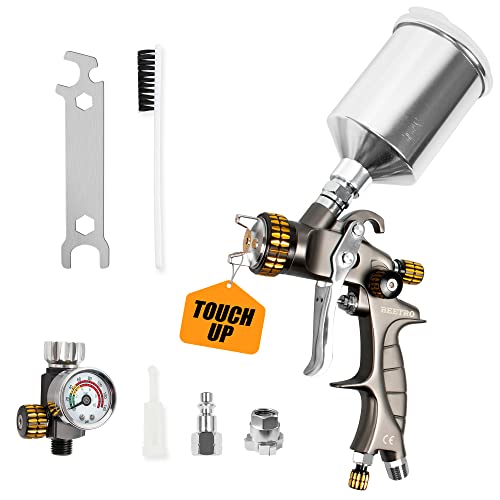
BEETRO HVLP Touch Up Mini Air Spray Gun 1.0mm 150ml

Wagner Spraytech Control Pro 130 HEA Sprayer

SRQLNTT 819 HVLP Spray Gun Kit 1.3/1.7/2.0mm

Wagner Spraytech Control Spray QX2 HVLP Stain Sprayer

Wagner Spraytech FLEXiO 570 HVLP Paint and Stain Sprayer
Meet The Standout Selections
The Fuji Spray system targets contractors who repeatedly spray trim, cabinetry, and furniture, where a narrow, adjustable pattern is more useful than maximum output. Its side control changes the fan width without forcing you to rebuild the gun, which helps during a long cabinet run or while fitting a coat around trim.
Compared with the compact BEETRO model later in this roundup, the T70 pairs a 25-foot hose with a turbine setup. That makes it the more substantial station-based choice, though setup and cleanup demand more attention than a small touch-up gun.
What Works In Its Favor
- The side fan-control knob supports quick changes between narrow and broad coverage.
- A non-bleeding design reduces the need to manage residual coating around the gun.
- The stay-cool handle supports longer finishing sessions with less hand discomfort.
- The 25-foot hose provides useful reach between the turbine and detailed work area.
- An integrated air valve helps limit bounce-back and misplaced coating.
Practical Considerations
- The turbine, hose, and gun create more components to clean and store than a compact cup-fed gun.
- A powerful compressor setup may be necessary for consistent operation, so check your shop air supply before committing.
Key Specs
Built With In Mind
Professional finishers working on cabinetry, millwork, and painted furniture get the most useful control package here.
Where Another Pick Shines
Choose the BEETRO HVLP Touch Up Mini Air Spray Gun for smaller clearcoat touch-ups and a less involved cleanup routine.
Small repairs are where this BEETRO gun earns its place. A 150 ml cup limits the amount of mixed clearcoat carried to the job, which is practical for a single panel, motorcycle part, or cabinet nick rather than a wall or deck.
The 1.0 mm stainless-steel nozzle favors fine application, but you may find the 150 ml cup restrictive during a continuous refinishing session. Compared with the Fuji T70, it trades station capability for portability and simpler handling.
Everyday Wins
- The compact cup is convenient for isolated clearcoat repairs and small painted parts.
- A 1.0 mm nozzle supports controlled material placement around detailed edges.
- The Type 2 adapter and air-control valve support compressor setup and overspray management.
- A filter adds another line of defense against airborne debris reaching the gun.
Small Caveats
- The small cup calls for frequent refills during multi-part refinishing work.
- Owners of fine-finish guns commonly need a disciplined cleaning routine, particularly after solvent-based clearcoats.
Feature Snapshot
Made For
Detail painters and automotive refinishers handling small clearcoat corrections benefit most from its focused format.
Consider Something Else When
Reach for the SRQLNTT 819 HVLP Spray Gun Kit when you need multiple nozzle sizes for broader automotive refinishing tasks.
The Control Pro 130 is built around medium and large interior or exterior assignments, not delicate touch-ups. Its suitability for unthinned paint and stain gives contractors fewer coating decisions to make on fences, decks, exteriors, and other broad surfaces.
That production focus separates it from the three nozzle gun and the compact BEETRO. You gain coverage suited to larger work, while losing some of the fine-detail control that makes cup guns attractive for trim and isolated repairs.
The Case For It
- Continuous spraying supports jobs where stopping for frequent cup refills would slow progress.
- Compatibility with unthinned paints and stains simplifies material planning.
- Low-overspray control is valuable around exterior edges where stray material creates extra work.
- The wider job capacity suits contractors moving from trim repair to full-surface projects.
Where It May Fall Short
- Its scale is less convenient for delicate furniture or a very small touch-up area.
- Cleaning and storage require more attention than with a compact gun, particularly after heavy paint jobs.
Who It Suits Best
Contractors handling larger residential paint and stain projects benefit most from its continuous application format.
Another Choice May Suit
Choose the Wagner Control Spray QX2 when fence and deck staining is the main task and three spray patterns offer more useful flexibility.
The 819 kit brings useful setup variation to automotive refinishing, with 1.3, 1.7, and 2.0 mm nozzle options. Switching sizes gives you a practical way to shape material output for different primer, paint, and clearcoat stages, though the right choice still depends on viscosity and airflow.
Compared with the BEETRO’s single 1.0 mm nozzle, this kit supports a wider range of spray demands. The added regulator and separator also make it more relevant to a shop-based workflow, not a one-off kitchen-table touch-up.
The Upside
- Three nozzle sizes let you vary output across automotive finishing stages.
- The flow and pattern adjustments support more deliberate placement on panels and parts.
- A regulator and separator add useful control to a dedicated spraying setup.
- The kit applies to automotive paint, primer, clearcoat, wall, roof, and industrial spraying tasks.
Possible Compromises
- The wider compatibility range demands correct setup rather than one-size-fits-all handling.
- More nozzle and air-control parts mean additional care during cleaning and storage.
Feature Breakdown
Right Fit For
Automotive refinishers working across primer, paint, and clearcoat benefit from the three-nozzle format.
Look Elsewhere When
Choose the Fuji Spray 2904-T70 for hose-based fine finishing when cabinetry and furniture make up most of your work.
The QX2 is built around outdoor wood projects, where stain coverage and pattern selection shape the finished result. Its three spray patterns give you a way to change technique across deck boards, fences, lattice, furniture, and pergolas instead of forcing one setup across every surface.
Compared with the Control Pro 130, the QX2 is more narrowly focused on stain work. In exchange, its pattern choices may matter more on decorative outdoor structures where direction and overspray affect the surrounding area.
Features That Help
- Three spray patterns support different directions and coverage needs.
- The format suits decks, fences, lattice, outdoor furniture, and pergolas.
- HVLP operation helps reduce the feel of a brush while keeping application practical for wood stain.
Points To Note
- Pattern control still requires preparation, masking, and steady movement for consistent edges.
- Wood surfaces need drying time between coats, so spraying alone does not shorten the entire project.
- The stain-focused format is less versatile for cabinet refinishing than the compact BEETRO gun.
The Right Fit
Deck, fence, and outdoor-furniture specialists get the most benefit from the three-pattern approach.
Reach For A Different Pick When
Choose the Wagner FLEXiO 570 for mixed indoor and outdoor painting, including walls, ceilings, and siding.
The FLEXiO 570 covers a broad middle ground between a touch-up gun and a large production sprayer. Its iSpray nozzle and adjustable setup are aimed at controlling coverage on siding, garages, walls, ceilings, and other indoor or outdoor surfaces.
Compared with the QX2, it suits a wider mix of paint and stain tasks. You may find its general versatility more useful than a dedicated stain pattern set, especially when a contractor moves between interiors, exteriors, and furniture projects.
Benefits That Matter
- The iSpray nozzle supports controlled coverage across broad surfaces.
- Adjustable output helps you balance coverage and overspray from one job to the next.
- Use across walls, ceilings, siding, and garages keeps the tool relevant to varied work.
- Removable parts make post-project cleaning more manageable than a sealed, fixed design.
Less-Strong Areas
- Its all-purpose positioning is less focused than the QX2 for pattern-driven outdoor stain work.
- Cleaning remains important after paint use, and owners commonly need to clear the nozzle and removable components promptly.
Essential Details
Built With In Mind
General residential contractors handling paint, stain, walls, ceilings, and siding get a versatile daily setup.
Swap It Out When
Choose the BEETRO HVLP Touch Up Mini Air Spray Gun for small clearcoat jobs where a 150 ml cup is more convenient.
What Matters Before You Commit To An HVLP Sprayer
Start with the coating and the surface. A fine-detail gun makes sense for trim, cabinetry, and isolated repairs, while a larger sprayer suits decks, siding, walls, and continuous production. HVLP means high-volume, low-pressure airflow, so the coating still needs proper preparation and thinning according to its own instructions.
The next factor is your air supply. Some guns need more airflow and pressure than others, and a compressor that cannot maintain the operating range can produce inconsistent results. Match the sprayer to the equipment already in your shop rather than judging it by the gun alone.
Pattern control matters for the finish. A narrow fan can help with trim and edges, while a wider pattern can reduce passes across a broad panel. Multiple nozzle sizes, adjustable flow, and separate pattern controls give you more ways to shape the result, but each additional control takes practice to use consistently.
Finally, think about cleanup and storage. A compact cup gun may suit a small shop, while a hose-connected system can be more convenient in a dedicated finishing area. Removable components, protected storage, and a clear routine for flushing the gun help preserve reliable performance between jobs.
Common HVLP Setup Mistakes
Many mistakes begin before spraying. Check the coating’s thinning requirements, confirm compressor capacity, and protect nearby surfaces before power is connected. A narrow test spray is more useful than starting over the entire workpiece, especially for unfamiliar materials.
Where The Extra Money Goes
Higher-tier systems often add a turbine, longer hose, larger controls, or broader coating compatibility. That added equipment pays off for frequent production work, tighter control, or jobs where a compact gun would require many refills. For occasional touch-ups, a simpler setup may serve you more conveniently.
Frequently Asked Questions
What is an HVLP sprayer?
An HVLP sprayer uses high-volume, low-pressure airflow to move coating toward a surface. The approach is useful for controlled application with relatively low overspray.
Can HVLP sprayers handle paint and stain?
Many models can handle both, but coating viscosity and material compatibility vary. Confirm the sprayer’s listed uses and follow the coating’s preparation instructions.
Are HVLP sprayers good for cabinets?
They work well for controlled cabinet refinishing when the surface is prepared properly. A small gun offers more maneuverability around doors, trim, and edges.
Do I need a special compressor?
The compressor must meet the sprayer’s airflow and pressure requirements. A larger shop compressor may be necessary for higher-flow models.
Can I use one sprayer for several coatings?
Possibly, after checking material compatibility and cleaning between uses. Switching between paint, stain, and clearcoat without proper cleaning can create application problems.
