
A toggle bolt grips behind a wall after the visible head and screw disappear into the cavity. That mechanical spread matters for shelves, mirrors, cabinets, and other fixtures mounted on drywall, plaster, tile, or hollow-core materials where a basic plastic anchor can loosen. These picks cover hollow doors, standard hollow walls, mixed solid-and-hollow substrates, and projects needing many fasteners.
An Overview Of The Picks

TOGGLER Toggle TA Hollow Door Anchors 100 Pack

Hillman 6 Pack 1/4-Inch Toggle Bolts
Hillman 2-Pack 3/16-Inch Toggle Bolts

TOGGLER Alligator AF8 Wall Anchors 100 Pack

TOGGLER SNAPTOGGLE BA Toggle Anchor 100 Pack
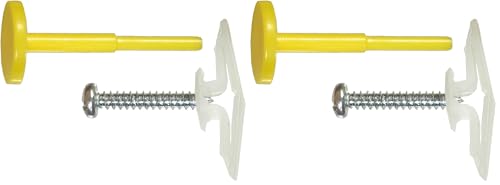
Hillman 41412 Pop Toggles Pack of 2
More Details On Our Top Picks
Hanging a towel bar, mirror, or coat rack on a hollow-core door calls for an anchor that engages inside the narrow cavity. The TOGGLER Toggle TA places its gripping section behind material measuring 1/8 to 1/4 inch thick, a more specialized fit than the general-purpose drywall bolts later in this roundup.
The anchor attaches before the bolt and fixture, which can make cabinet hardware and door-mounted accessories easier to position. You supply the fasteners, so matching screw length, head style, and thread requirements to the door face remains your responsibility.
The Value In It
- Supports hollow-core doors and other thin panels from 1/8 to 1/4 inch thick.
- The 100-piece format suits multiple rooms, rental property, or repeated repair work.
- Pre-positioning the anchor helps keep cabinet pulls and hooks aligned.
- Its cavity-specific design differs from standard winged wall bolts.
Things To Consider
- Screws are excluded, so you must select compatible hardware separately.
- The narrow material range makes it less suitable for standard hollow block or thicker walls.
- Misaligned pilot holes can prevent the anchor from sitting correctly.
Key Specs
Who It Suits Best
This option fits homeowners and property maintainers mounting hardware repeatedly on thin hollow-core doors.
Consider Something Else When
Hillman 6 Pack 1/4-Inch Toggle Bolts suit conventional hollow walls where steel fasteners and a wider material range matter more.
The standard 1/4-inch toggle bolt offers a more familiar route for supporting shelves, brackets, and fixtures on hollow walls. Unlike the TOGGLER Toggle TA, these steel fasteners are not designed specifically for narrow hollow-core door panels. Their 3-inch length and round head suit projects where extra cavity depth is available.
Spring-loaded wings spread behind the wall after the bolt passes through a pilot hole. That wider bearing area helps manage medium to heavy loads on drywall, plaster, tile, and hollow block, although the correct diameter and placement still determine whether the joint stays secure.
Useful Highlights
- Steel construction suits demanding residential and light commercial mounting.
- The expanding wings distribute force across a broader rear surface.
- Six bolts cover a shelf with several attachment points or two separate fixtures.
- One 1/4-inch size simplifies planning across several household projects.
Trade Offs
- Pilot drilling is required so the wings can pass and expand behind the surface.
- The 3-inch bolt may not suit a shallow cavity, so depth checks matter.
- Tile mounting can chip without the appropriate drilling approach.
Feature Snapshot
Made For
This set serves experienced home projects involving shelving, wall fixtures, and hollow block with adequate depth.
Another Choice May Suit
Hillman 41412 Pop Toggles are easier for a small job limited to drywall, plaster, or tile between 1/8 and 1/4 inch thick.
Two 3/16-inch machine screws cover the common case of mounting one mirror, a small shelf, or a lightweight fixture. Compared with the preceding 1/4-inch Hillman set, the smaller bolt can suit narrower fixture holes and projects with less room behind the wall, though the two-piece format limits larger jobs.
The zinc-plated steel construction provides a practical surface for interior drywall, plaster, and tile. The round head machine screw tightens after the wings open behind the surface, creating a broad support area that resists pull-through without relying on the crumbling face of drywall.
Bright Spots
- The 3/16-inch machine screw fits a useful middle range between small plastic anchors and larger bolts.
- Two fasteners suit paired mounting points for mirrors and lightweight shelves.
- Zinc plating adds corrosion resistance for ordinary interior conditions.
- Spring wings bear against a wider area behind the wall.
Small Caveats
- The two-piece count is restrictive for a roomful of fixtures.
- A pilot hole must match the bolt and the wall material.
- Very shallow cavities may not provide enough room for the 3-inch fastener.
The Right Fit
This pair works well for beginners mounting two small fixtures on interior drywall, plaster, or tile.
Reach For A Different Pick When
TOGGLER Alligator AF8 Wall Anchors fit you better when one project spans hollow drywall and solid masonry materials.
Not every room presents one predictable wall material, and the TOGGLER Alligator AF8 changes shape to address that problem. Its polypropylene body expands and elongates inside solid concrete, brick, and stone, while a flanged head and rear jaws engage cavities in drywall. That adaptability makes it more versatile than the metal toggle bolts in Items 2 and 3.
You position the anchor and drive a suitable screw to activate its holding action. The 100-piece format favors contractors, landlords, or homeowners with a long repair list, though excluding screws means your fastener choice still influences the finished connection.
What Makes Sense
- Handles hollow and solid substrates without changing anchor families mid-project.
- The 5/16-inch format supports a range of common fixtures.
- A 100-piece supply suits property maintenance and workshop storage.
- Corrosion-resistant polypropylene suits moisture-prone installation areas better than bare lightweight plastic.
- The flanged head adds stability inside a wall cavity.
Possible Compromises
- Screws are not included and must suit both the anchor and fixture.
- Each substrate still needs an accurately sized pilot hole.
- Owners report that careful storage prevents the long anchors from warping or becoming difficult to insert.
Core Details
Built With In Mind
Property maintainers and renovation-focused homeowners benefit from carrying one anchor type across several materials.
Where A Sibling Pick Shines
TOGGLER SNAPTOGGLE BA anchors suit repeat hollow-wall jobs that already use 3/16-24 threaded metal bolts.
Installers working repeatedly with metal bolts gain more consistency from the TOGGLER SNAPTOGGLE BA system. The anchor installs behind gypsum board, drywall, and concrete block ranging from 3/8 to 3-5/8 inches thick. It is less specialized than the Toggle TA, yet narrower than the 5/16-inch Alligator AF8.
Attaching the channel before inserting the bolt and fixture allows one person to maintain alignment during cabinet or hardware installation. The design is particularly useful in occupied homes, where keeping a shelf or bracket in position without a second set of hands matters.
Where It Helps
- Supports a substantial range of hollow-material thicknesses.
- Accepts standard 3/16-24 UNC-threaded metal bolts for repeat compatibility.
- Pre-installation can simplify positioning during solo cabinet mounting.
- The 100-piece quantity suits professional maintenance kits and busy workshops.
- Gypsum board, drywall, and concrete block coverage broadens common applications.
Details To Watch
- Bolts are sold separately, and their thread and length must match.
- The 3/8-inch lower limit excludes thinner hollow doors and panels.
- Removal and reinstallation may require careful handling of the installed channel.
Who Should Grab It
Installers handling many cabinets or fixtures in drywall and concrete block benefit from the 100-count supply.
Not Your Match When
TOGGLER Toggle TA Hollow Door Anchors fit thin hollow-core doors better than this system.
The Hillman 41412 keeps the scope refreshingly modest: two mechanical fasteners for drywall, plaster, and tile between 1/8 and 1/4 inch thick. That range overlaps with thin panels and certain shallow wall cavities, making a pilot-hole size check essential before drilling. The pack is most sensible for one small fixture rather than an entire wall.
Its pop-toggle format suits a first home repair involving a lightweight wall accessory, provided the surface falls within the stated thickness. Compared with the earlier 3/16-inch Hillman bolts, these offer less material versatility and only two pieces, so planning your total attachment count before starting prevents a second trip.
Practical Pluses
- A straightforward choice for a single small mounting project.
- The two-piece format reduces leftover hardware after a paired installation.
- It supports drywall, plaster, and tile within a defined thin-wall range.
Worth Noting
- Walls outside 1/8 to 1/4 inch thick fall beyond the stated application range.
- Only two fasteners are included, which limits larger assemblies.
- Careful drilling and anchor positioning remain necessary during installation and removal.
Quick Facts
Who Will Love This
First-time home decorators benefit from this pair for lightweight accessories on compatible thin walls.
Skip It When
Hillman 6 Pack 1/4-Inch Toggle Bolts make more sense for multi-point shelving on deeper hollow walls.
Choosing an Anchor That Fits the Wall
Start with the wall rather than the fixture. Hinge-style toggle bolts and pop toggles spread force behind hollow surfaces, but their useful thickness ranges, body materials, and bolt interfaces differ. A quick check now can prevent a loose mount or a hole that never holds.
Match the Hollow Space
A cavity must leave enough room for the wings, jaws, or channel to open behind the wall. Thin hollow-core doors suit the TOGGLER Toggle TA, while thicker gypsum board and concrete block fit the SNAPTOGGLE BA. For any system, confirm the wall thickness and cavity depth before selecting the fastener.
Consider the Wall Material
Drywall accepts several anchor styles, but plaster, tile, and hollow block can behave differently under drilling and load. Metal toggle bolts suit the listed hollow surfaces, while the Alligator AF8 adapts across solid masonry and drywall. You’ll also need to guard tile with a suitable drilling method to reduce surface damage.
Check the Included Hardware
A pack of anchors does not always include screws. TOGGLER’s Toggle TA, Alligator AF8, and SNAPTOGGLE BA options require separate bolts, and their stated interfaces are not interchangeable. By contrast, the Hillman sets include toggle bolts, which simplifies assembly after you confirm diameter, length, and head style.
Practical Anchor Decisions
Mistakes Worth Dodging
A common mistake is selecting by fixture weight alone. The wall cavity, mounting material, and available depth also govern fit, so inspect the wall before drilling. Another trap is assuming every 5/16-inch anchor accepts the same screw.
What The Upgrade Payoff Means
Specialized systems can reduce repeated alignment work or handle several wall materials, but only when their specified thickness and bolt requirements match your project. More hardware does not guarantee a better fit; carrying the right interface matters more than a larger count.
Frequently Asked Questions
Are toggle bolts suitable for hollow-core doors?
Hollow-core doors require an anchor designed for their thin panel construction. The TOGGLER Toggle TA is specified for hollow doors and thin panels from 1/8 to 1/4 inch thick.
What size hole does a toggle bolt need?
The pilot hole must accommodate the bolt and any part of the anchor that passes through the wall face. Exact sizing depends on the selected product, wall material, and installation instructions.
Can toggle bolts hold shelves on drywall?
Spring wings or rear jaws spread the load across a wider area behind drywall. Shelf capacity still depends on bolt size, wall thickness, cavity depth, spacing, and the condition of the wall.
Are TOGGLER anchors sold with bolts?
The Toggle TA, Alligator AF8, and SNAPTOGGLE BA packs shown here exclude their bolts. You need compatible screws or threaded metal bolts selected for the anchor and fixture.
Are the Hillman toggle bolts reusable?
Repeated removal may damage the wall opening or leave the fastener less stable. Replacement during repositioning is the more dependable approach when the surrounding gypsum or plaster shows damage.
