
Rotary laser levels bring dependable reference lines to fencing, foundations, walls, ceilings, and renovation projects. The right model determines how far the beam reaches, whether the tool handles outdoor conditions, and how much setup you need for solo work. These options cover compact indoor layouts, full-room coverage, and demanding grade work, with clear trade-offs to help you choose the right fit.
A Fast Comparison Of The Options

DOVOH H3-360G-KIT Outdoor Laser Level Kit

Takamine GM120S Green 3×360° 12-Line Laser Level
Lusweimi 16-Line 4×360° Laser Level with 72” Tripod

Johnson JRT300-RDHV-S Red Dual Slope Rotary Laser
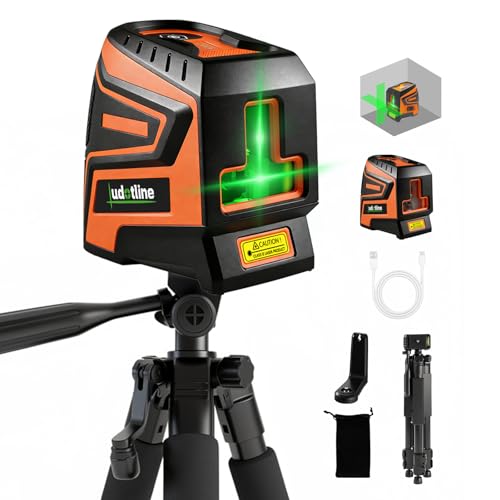
ludotline Green Self-Leveling Laser Level with Tripod
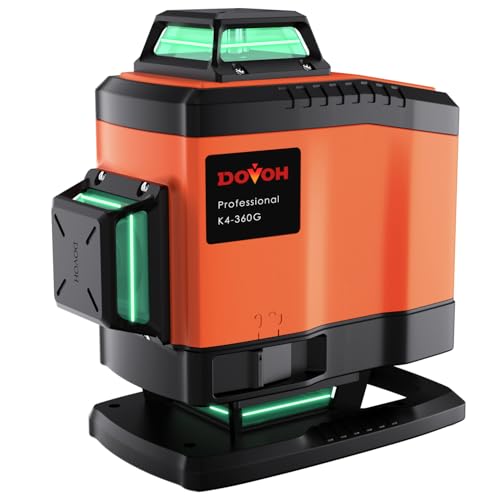
DOVOH K4-360G 4D Green Laser Level
The Strengths Of Each Pick
Outdoor reference lines become easier to follow when visibility drops and ambient light washes across the work area. The DOVOH H3-360G-KIT uses a receiver, a detector that captures the rotating beam and signals its position, to support placement beyond the visible beam.
For landscaping, fencing, and large site layouts, that receiver changes the working experience more than another collection of indoor lines would. You gain a practical detection range of 400 feet, although that figure depends on receiver use rather than direct beam visibility.
Practical Advantages
- The receiver helps you locate the rotating beam in bright outdoor conditions.
- A 400-foot operating range supports long layouts across yards, paths, and building sites.
- Receiver support reduces the need to stand directly beside the beam during measurement.
Things To Consider
- The stated range is not the distance at which the beam remains plainly visible.
- Outdoor setups still depend on a stable mount and careful leveling.
- For dense interior planes, the Takamine model offers broader line coverage.
Key Specs
Right Fit For
You benefit most from this model on open-air projects where a visible beam alone becomes difficult to track.
Another Choice May Suit
The Johnson JRT300-RDHV-S suits professionals who need dual-slope control and a much longer rotary range.
Room layouts benefit from multiple intersecting planes, and the Takamine GM120S projects 12 green lines across three 360-degree directions. Two vertical planes and one horizontal plane give you simultaneous references for walls, floors, and ceilings without moving the tool constantly.
Compared with the DOVOH H3-360G-KIT, the focus shifts from receiver-assisted outdoor reach to interior line density. The horizontal and vertical planes meet at right angles, helping you establish square corners during tile, cabinet, or framing layouts.
Useful Highlights
- Three-plane coverage projects references across several room surfaces at once.
- The 12-line arrangement reduces repositioning during cabinet and tile layouts.
- Green output remains useful in busy work areas where finer lines are easier to follow.
Minor Gripes
- Twelve lines can create visual density in small rooms with reflective surfaces.
- Outdoor placement lacks the receiver-supported range of the DOVOH H3-360G-KIT.
- Storage benefits from a case because a multi-plane tool is easier to damage around its apertures.
Feature Snapshot
Who It Suits Best
You get the most value from this model during interior installation work involving square layouts and repeated wall references.
A Better Fit Elsewhere
The Lusweimi 16-Line 4×360° Laser Level offers denser plane coverage for larger renovation spaces.
Renovation work often moves between floors, walls, and ceilings, so the Lusweimi model’s 16 lines provide broad reference coverage. Four 360-degree planes cover two horizontal and two vertical directions, reducing the need to reset the body between separate layout planes.
The included 72-inch tripod adds useful positioning height, while the remote, two batteries, and carry bag make the package more practical for mobile work. Compared with the Takamine GM120S, you gain four more lines and a fuller accessory set, though the denser display may feel busy in compact rooms.
What Pays Off
- Sixteen lines create a detailed grid for flooring, walls, and ceiling installation.
- The included tripod removes the need to source a separate stable support.
- Two batteries help you continue after one pack loses charge during a long layout session.
- The carry bag offers a more organized option for moving the tool between work areas.
Points To Note
- Four-plane coverage can overwhelm very small rooms or highly reflective surfaces.
- More visible lines do not replace a stable tripod or clear working path.
- The kit is heavier to carry than a compact indoor-only layout tool.
Made For
You benefit most during full-room renovation, tile alignment, and construction work where several reference planes are needed together.
Consider Something Else
The Takamine GM120S is easier to manage in confined rooms where twelve lines already provide ample coverage.
Grade control changes the job entirely, and the Johnson JRT300-RDHV-S is built around that requirement. A dual-slope rotary laser projects an adjustable reference for foundations, drainage, grading, and other elevation work, reaching up to 4,000 feet with the supplied detector setup.
Unlike the green line models in this list, this system prioritizes a rotating red beam and extended outdoor operation. The package includes a detector, remote, tripod, magnetic target, and 13-foot grade rod, giving you a more complete setup for solo layout work.
A Favorable Mix
- Dual-slope control supports elevation changes across foundations and graded terrain.
- The 4,000-foot range handles large construction areas without frequent repositioning.
- A 400-foot remote-control range supports more flexible solo operation.
- Five rotation speeds suit different measurement and visibility needs.
Honest Caveats
- The system and included accessories require more storage space than compact line lasers.
- Outdoor accuracy still depends on correct setup and unobstructed line of sight.
- The equipment is more specialized than needed for basic household shelving or trim layout.
Technical Highlights
Built With In Mind
You gain the most from this system as a construction professional handling large grading, foundation, or site-preparation projects.
Another Choice May Suit
The DOVOH H3-360G-KIT is the simpler fit for outdoor layouts that need a receiver but not dual-slope grade control.
Simple projects benefit from a level that settles quickly and does not require a complicated control routine. The ludotline self-leveling laser reaches its reference position in about two seconds, while manual mode supports angled layouts after the initial setup.
The green beam provides clear lines for shelving, pictures, tile, and general renovation work, with visibility reaching 100 feet or 165 feet in pulse mode. The included tripod makes this a practical starting point, although the less detailed model name and limited coverage information make it harder to compare with the more specialized systems.
A Few Strong Suits
- Rapid self-leveling reduces delays during repeated household layout tasks.
- Green output helps you follow fine references around furniture and wall surfaces.
- Pulse mode extends the stated operating visibility for larger spaces.
- The bundled tripod provides a basic support for everyday projects.
Smaller Limitations
- The listed model name does not identify its exact coverage pattern or line count.
- A tripod kit may not provide the fine height adjustment needed for every elevated reference.
- For large exterior work, the DOVOH H3-360G-KIT offers clearer receiver-assisted guidance.
Who Should Grab It
You benefit most as a beginner handling shelves, pictures, basic tiling, and small home-improvement layouts.
Look Elsewhere
The DOVOH K4-360G gives you documented four-plane coverage when a defined indoor projection pattern matters.
Four-plane coverage makes the DOVOH K4-360G a practical middle ground between compact line tools and rotary systems. Two horizontal and two vertical planes project references across room surfaces, which helps with alignment, installation, and renovation tasks that involve more than one wall or ceiling direction.
The overmolded rubber housing adds protection around a tool that may spend time near floors, ladders, and active work areas. Compared with the Takamine GM120S, you gain another horizontal plane, while the Lusweimi model remains the denser choice with its 16-line package and included accessories.
Noteworthy Benefits
- Two horizontal and two vertical planes support comprehensive room references.
- Green lines remain useful for aligning cabinetry, trim, tile, and framing.
- The rubber housing offers added protection during ordinary handling and site use.
- Four-plane coverage reduces the need to rotate the tool between major axes.
Room For Improvement
- Green beams can become harder to distinguish in very bright spaces.
- The model does not provide receiver-based outdoor range like the DOVOH H3-360G-KIT.
- Multiple planes need a stable mount and some care around exposed laser apertures.
Quick Facts
Whose Shelf It Belongs On
You benefit most as a homeowner or renovator who needs a balanced four-plane setup for repeated interior alignment tasks.
Swap It Out
The Johnson JRT300-RDHV-S is the better choice for professionals who need long-range dual-slope grade control.
Choosing A Laser Level By The Work Ahead
A line laser and a rotary laser serve different jobs. A line laser projects walls, floors, or ceilings for alignment, while a rotary laser sends a rotating beam across a larger construction area and usually relies on a detector for distant reference. Your project type matters more than the number of lines alone.
Match Coverage To The Space
For cabinetry, tile, picture hanging, and framing, a green line model with several planes can reduce repeated setup. The Takamine GM120S offers 12 lines, while the DOVOH K4-360G provides four-plane coverage. Larger renovation rooms may justify the Lusweimi model’s 16-line arrangement, although more lines can look crowded in tight spaces.
Check Outdoor Needs Carefully
Outdoor visibility depends on ambient light, surface contrast, and whether you use a receiver. The DOVOH H3-360G-KIT is designed around receiver-assisted operation, while the Johnson system uses a rotary beam and detector for extended grade work. Do not confuse an operating range with the distance at which you can plainly see the beam.
Think About Positioning
A tripod adds height and stability, but its usefulness depends on adjustment range and floor conditions. Kits such as the Lusweimi and ludotline include a tripod for immediate setup. Professional grade packages may also include a grade rod, detector, target, and remote, which improves solo positioning but increases the amount of gear to store.
Match The Tool To Your Skill Level
A self-leveling tool reduces manual calibration effort by settling into a level reference on its own. That helps beginners and speeds repeated tasks for experienced users. Large grading projects still require careful placement, line-of-sight checks, and an understanding of elevation, so a specialized rotary system deserves a dedicated setup routine.
A Few Practical Checks Before You Choose
Mistakes Worth Dodging
Do not choose by line count alone, because outdoor range and grade control may matter more than indoor density. Compare the projected pattern, included stand, detector support, and storage needs with your actual work area.
What The Higher Tier Buys
Higher-end systems tend to add specialized coverage, longer range, slope adjustment, remote operation, and stronger environmental protection. Those features can help on large sites, but a simple green line model remains more suitable for household projects.
Frequently Asked Questions
Are rotary laser levels better than line lasers?
Rotary laser levels suit large outdoor layouts and elevation work, while line lasers provide easier indoor alignment. Your project environment determines which system is more useful.
What does 360-degree coverage mean?
A 360-degree plane projects reference lines across a full horizontal or vertical direction. Multiple planes provide several room-facing references without constant repositioning.
Do laser levels need a receiver?
A receiver helps locate a rotating beam over distance or in bright conditions. Compact line lasers usually use the visible beam directly, while rotary systems often depend on a detector.
Which laser color is easier to see?
Green beams are often easier to follow on indoor walls and detailed layouts. Visibility still changes with room lighting, surface finish, and distance from the tool.
What should you check before using a laser level?
Confirm that the tool is level, securely mounted, and free from obstruction. Keep the beam path clear, follow the manufacturer’s operating instructions, and store the unit carefully between projects.
