
Having a home EV charging station makes life so much easier for electric vehicle owners. Imagine charging your car overnight at your own home EV charging station, waking up to a full battery, and skipping those long lines at public charging stations. Currently, 71% of electric vehicle owners enjoy this convenience of having a home EV charging station.
You might worry about installation costs or safety, but these concerns are manageable. Evaluate your home’s electrical infrastructure before installation of your home EV charging station. Choose certified charging equipment to minimize risks. Typical costs include Level 1 chargers ranging from $100-200 and Level 2 chargers from $400 to $2,000, with installation averaging between $800 and $2,500. Setting up a home EV charging station not only saves you time and money but also enhances your overall EV experience.
Key Takeaways
Home EV charging stations offer convenience by allowing you to charge your vehicle overnight, eliminating the need for public charging.
Charging at home can save you over $850 annually compared to public charging, making it a cost-effective choice.
Assess your home’s electrical system before installation to ensure it can support the charger you choose.
Select a suitable location for your charger that is accessible, well-lit, and protected from the elements.
Regular maintenance and proper cable management are essential for the safety and longevity of your outdoor EV charger.
Benefits of Home Charging
Convenience
Having a home EV charging station offers you unmatched convenience. Imagine never having to rush to a public charging station again. With home charging, you can plug in your vehicle overnight and wake up to a fully charged battery. Here are some key points about the convenience of home charging:
You control your charging schedule. This is especially helpful if you have a daily commute.
You avoid the hassle of searching for available public charging stations, which can sometimes be scarce.
Charging at home means you can charge your vehicle whenever it suits you, without worrying about long wait times.
Public charging stations can be more expensive and often come with unexpected fees. By charging at home, you eliminate these costs and enjoy a more predictable charging experience.
Cost Savings
Charging at home can save you a significant amount of money compared to using public charging stations. Here’s a quick comparison of the costs:
Charging Method | Cost per kWh | Cost per mile | Annual Cost (12,200 miles) |
|---|---|---|---|
Home Charging | $0.17 | $0.06 | $732 |
Public Charging | $0.37 | $0.13 | $1,584 |
As you can see, charging at home can save you over $850 annually! This is a substantial amount that can go towards other expenses or even fun activities.
Additionally, home EV charging contributes to environmental benefits. Electric vehicles produce significantly less carbon pollution than traditional gasoline vehicles. The Environmental Protection Agency (EPA) states that without electric vehicles, average emissions would have remained high. By choosing to charge at home, you not only save money but also help reduce your carbon footprint.
Installation Process for Home EV Chargers
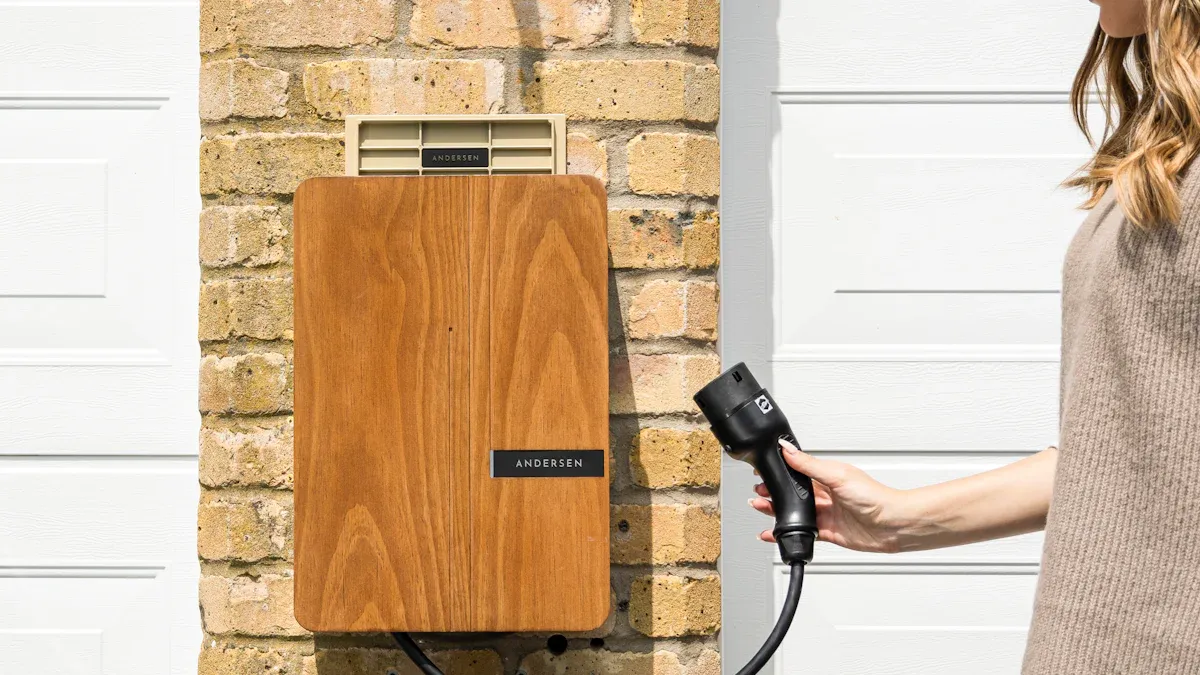
Installing a home EV charger involves several important steps. You want to ensure everything is done correctly for safety and efficiency. Here’s a breakdown of the installation process, starting with site assessment.
Site Assessment
Before you dive into the installation, you need to assess your site. This step is crucial for determining the best place to install your charger. Here are some factors to consider:
Factor | Description |
|---|---|
Positioning | Think about where the charging ports are located on your vehicle. This will help you decide the best spot for the charger. |
Mounting | Choose a mounting option that minimizes interference with vehicles and pedestrians. Make sure the connector is at a suitable height for easy access. |
Accessibility | Ensure your installation complies with ADA requirements, keeping pathways wide enough for easy access. |
Area Lighting | Position your EV charging station in a well-lit area to enhance visibility and reduce the risk of accidents. |
Weather | Protect your charger from rain and snow to prevent damage. |
After assessing these factors, you can move on to the next step: equipment selection.
Equipment Selection
Choosing the right equipment is essential for your home EV charger installation. You have a couple of options to consider:
Level 1 Charger: This charger connects to a standard 120V outlet. It provides about 3 to 5 miles of range per hour, making it suitable for plug-in hybrids or overnight top-ups.
Level 2 Charger: This option requires a 240V outlet or hardwiring. It offers a faster charging speed, adding 12 to 40 miles of range per hour. This is ideal for daily charging of all EVs, including full electric vehicles.
When selecting your charger, consider how much it costs to install. The installation costs typically range from $1,000 to over $3,000, depending on your existing electrical infrastructure and the complexity of the installation.
Tip: Always work with certified electricians. They can help ensure compliance with local codes and handle the technical aspects of the installation. They will also assist you in obtaining the necessary permits.
Here are the key steps involved in the installation process:
Site Preparation: Create detailed diagrams for excavation and conduit trenching. Confirm your power supply capacity with local utilities.
Working with Certified Electricians: Hire professionals to ensure everything meets state and local codes.
Mounting the Chargers: Install the EVSE connectors at the correct height, following ADA standards.
Testing and Network Setup: Have an independent inspector verify compliance and perform final checks.
Remember, after installation, the work must be inspected by your local municipality or relevant safety authority to ensure everything is up to code.
Permits and Compliance
Obtaining the required permits is a critical step in the installation process. Here’s what you need to know:
Your electrician will assist you in getting the necessary permits.
Compliance with local building codes is essential. This ensures your installation is safe and legal.
By following these steps, you can ensure a smooth installation process for your home EV charging station.
Outdoor EV Charger Setup
Setting up your outdoor EV charger requires careful thought. You want to ensure it’s both functional and safe. Here are some key factors to consider when choosing the best place to install your charger.
Location Considerations
When selecting a location for your outdoor EV charger, keep these considerations in mind:
Consideration | Description |
|---|---|
Proximity | Place the charger close to your parking space. This minimizes cable length and reduces tripping hazards. |
Protection from the elements | Choose a sheltered spot to protect the charger from rain, snow, and extreme temperatures. |
Visibility | Ensure the charger is well-lit and visible. This deters theft and enhances safety during nighttime use. |
Electrical accessibility | Install near your main electrical panel to simplify wiring and reduce costs. |
Future expansion | Select a location that allows for easy addition of more chargers if needed. |
Aesthetics | Consider how the charger will look and comply with any HOA regulations. |
Professional consultation | Consult with a licensed electrician to ensure safety and compliance with regulations. |
By considering these factors, you can enhance the usability and safety of your outdoor installation.
Safety Measures
Safety is paramount when installing outdoor EV chargers. Here are some essential safety measures to keep in mind:
Opt for a hardwired connection for safety and durability.
Hire a licensed professional for installation to meet safety regulations.
Choose chargers with a type 4X rating for outdoor use to ensure protection against harsh weather.
Install Ground Fault Circuit Interrupters (GFCIs) to cut power quickly if they detect current leakage, reducing shock risks.
Regular maintenance is crucial. Check for wear on connectors and cables, ensuring secure attachments and keeping the system free from obstructions.
Outdoor EV chargers must withstand environmental factors like rain, snow, and temperature extremes. According to Article 625 of the NEC, proper installation includes considerations for location, height, and safety measures such as ventilation and waterproofing.
By following these guidelines, you can ensure a safe and efficient outdoor charging experience for your electric vehicle.
Best Practices for Outdoor Charging Stations
Cable Management
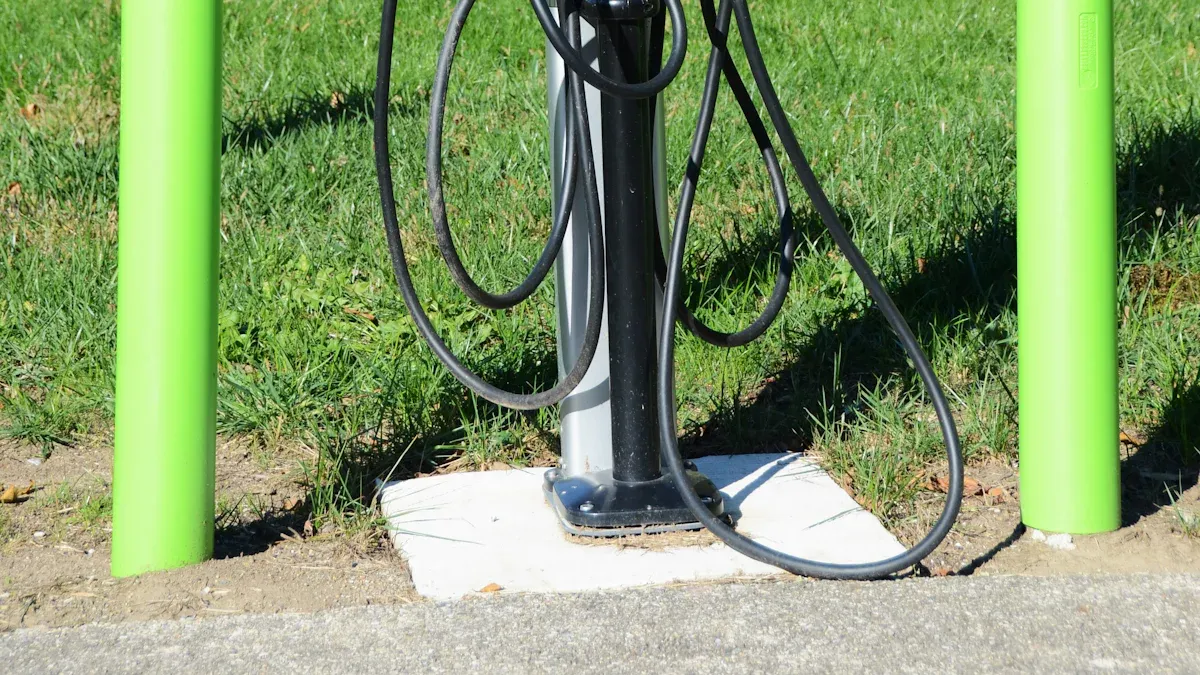
Proper cable management is essential for outdoor EV chargers. It not only enhances safety but also prolongs the life of your charging equipment. Here are some effective strategies to keep your cables organized:
Utilize cable conduits to protect wires and avoid sharp bends.
Route cables along walls or use floor-mounted trays to keep them secure and out of walkways.
Use cable management systems to keep cables organized and off the ground.
Avoid sharp bends or kinks when storing cables to maintain their integrity.
Regularly inspect cables for wear and secure them to minimize tripping hazards.
Keeping cables off the ground prevents moisture exposure and reduces tripping risks. Consider using a cable retractor to elevate the charging cable, making it safer and more convenient for daily use. A neat setup not only enhances safety but also improves the overall aesthetic of your charging station.
Regular Maintenance
Routine maintenance is crucial for ensuring your outdoor EV charger operates optimally. Here’s a quick table outlining recommended maintenance tasks and their frequency:
Maintenance Task | Frequency |
|---|---|
Visual inspection of enclosure | Daily, Monthly |
Touchscreen responsiveness check | Daily, Monthly |
Connector condition verification | Daily, Monthly |
Electrical system calibration | Quarterly |
Insulation resistance testing | Quarterly |
Thermal management evaluation | Quarterly |
Comprehensive operational log review | Annual |
Grounding & power system certification | Annual |
You should perform weekly checks for visible wear and basic operation. Monthly inspections allow for deeper cleaning and connectivity assessments. Annual inspections by qualified technicians ensure electrical safety and performance.
By following these best practices, you can maintain a safe and efficient outdoor EV charging station, ensuring a smooth experience every time you charge your vehicle.
Setting up a home EV charging station can greatly enhance your electric vehicle experience. Remember these key points:
Evaluate your electrical system to ensure it can handle the charger load.
Choose a convenient and compliant location for the charger.
Understand the types of chargers available (Level 1 vs. Level 2).
Be aware of the costs involved in installation, including potential upgrades.
Obtain necessary permits and comply with local regulations.
Now that you know the basics, take the next steps in your EV charging journey. Assess your charging needs, check for incentives, and consult with professionals. You’re on your way to enjoying the convenience of home charging!
FAQ
What is the difference between Level 1 and Level 2 chargers?
Level 1 chargers use a standard 120V outlet and provide 3-5 miles of range per hour. Level 2 chargers require a 240V outlet, offering 12-40 miles of range per hour, making them ideal for daily use.
Do I need a permit to install a home EV charger?
Yes, you typically need a permit for installation. Your electrician can help you obtain the necessary permits and ensure compliance with local building codes.
How long does it take to install a home EV charger?
Installation time varies but usually takes a few hours to a full day. Factors include your home’s electrical setup and the complexity of the installation.
Can I install an EV charger myself?
While some homeowners may attempt DIY installation, it’s best to hire a licensed electrician. They ensure safety, compliance, and proper setup, reducing risks.
What maintenance does an outdoor EV charger require?
Regular maintenance includes visual inspections, checking connectors, and ensuring the area is clear of debris. Schedule annual inspections by a qualified technician for optimal performance.