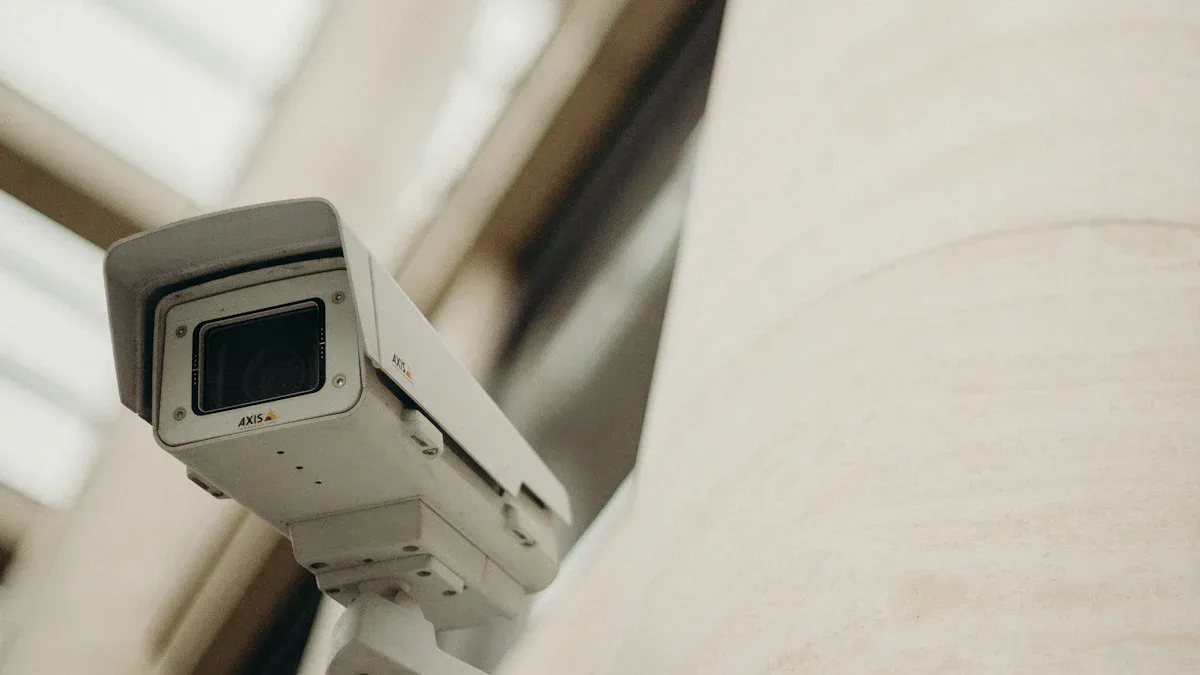
Outdoor security cameras and smart monitoring solutions play a crucial role in enhancing your home security. These technologies not only deter crime but also provide you with peace of mind. Research shows that the presence of outdoor cameras can lower burglary rates by up to 60%. Additionally, approximately 94 million U.S. households utilize some form of security system, including smart video recording and intelligent alerts. With real-time monitoring capabilities, you can keep an eye on your property and protect against trespassers effectively.
Key Takeaways
Outdoor security cameras can reduce burglary rates by up to 60%, providing peace of mind for homeowners.
Choose between wired and wireless cameras based on your installation preferences and reliability needs.
Consider key features like resolution, night vision, and motion detection to ensure effective monitoring.
Smart monitoring solutions offer remote access, allowing you to control your security system from anywhere.
Regular maintenance and optimal placement of cameras enhance their effectiveness and longevity.
Types of Outdoor Security Cameras
When choosing outdoor security cameras, you will encounter various types, each with unique features and benefits. Understanding these options can help you make an informed decision for your home security needs.
Wired vs. Wireless Outdoor Security Cameras
Wired and wireless outdoor security cameras each have their advantages and disadvantages.
Wired Cameras: These cameras connect directly to your home’s power supply and network. They require installation that involves drilling and routing cables. While this may seem cumbersome, wired cameras offer high reliability. They provide a stable connection that does not drop, making them ideal for continuous monitoring.
Wireless Cameras: These cameras operate on Wi-Fi and are easier to install. You can set them up without extensive wiring, making them a popular choice for DIY enthusiasts. However, their reliability can vary. Factors like battery life and network congestion can affect performance.
Here’s a quick comparison of the two types:
Feature | Wired (PoE) | Wi-Fi Cameras | Wireless (Battery/Solar) |
|---|---|---|---|
Installation | Requires drilling, cable routing, and often professional setup | DIY-friendly, needs outlet and strong Wi-Fi | Plug-and-play, no wiring needed |
Reliability | High: stable, wired connection doesn’t drop | Medium: network congestion can cause lag or loss | Low–Medium: batteries die, signals fluctuate |
Bullet and Dome Cameras
Bullet and dome cameras are two common types of outdoor security cameras, each serving different purposes.
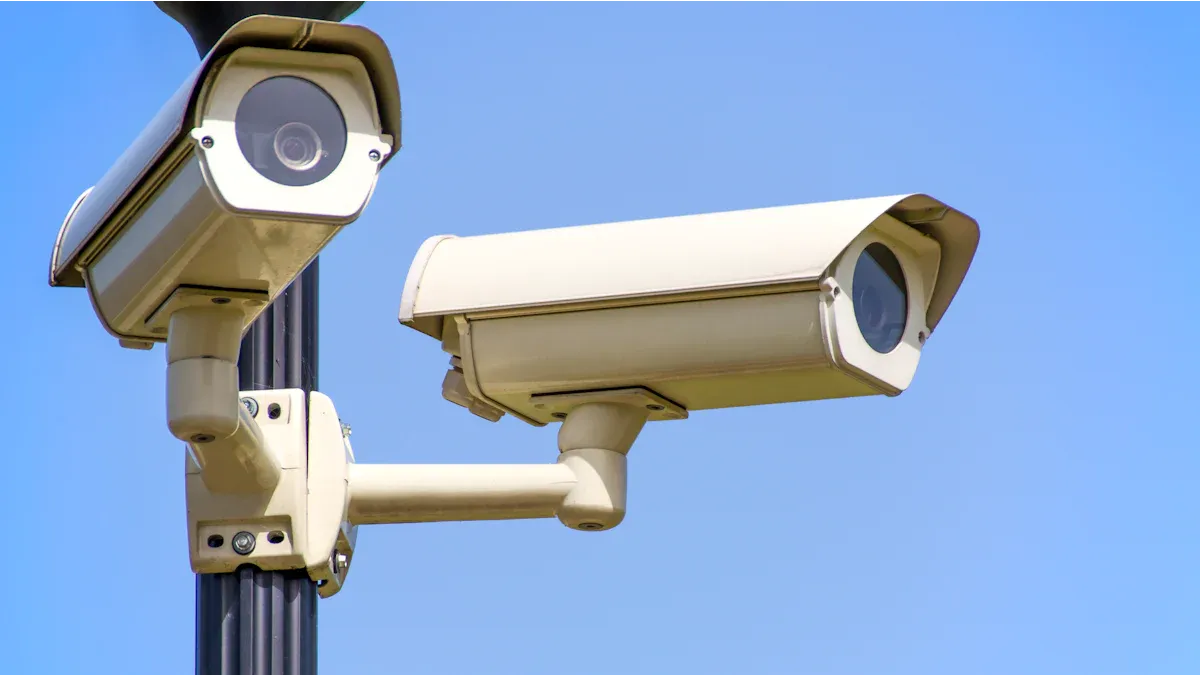
Bullet Cameras: These cameras are easily recognizable due to their cylindrical shape. They are more visible, which can act as a deterrent to potential intruders. Bullet cameras excel in long-range capabilities, making them suitable for monitoring large areas. However, they can be prone to tampering since their design makes them easier to adjust or disable.
Dome Cameras: These cameras have a dome-shaped cover that makes them less noticeable. Their discreet design allows for subtle surveillance, which can be beneficial in public spaces. Dome cameras typically offer a wider field of view, making them ideal for covering larger areas. They are also generally more durable and resistant to vandalism.
Here’s a comparison of their features:
Feature | Bullet Cameras | Dome Cameras |
|---|---|---|
Visibility | More visible, acts as a deterrent | More discreet, less visible |
Range | Long-range capabilities | Limited range |
Installation Ease | Easier to install | Harder to install and reposition |
Durability | Prone to tampering | Generally more durable |
Field of View | Narrower field of view | Wider field of view |
PTZ Cameras and Their Benefits
PTZ (Pan-Tilt-Zoom) cameras offer advanced features that enhance outdoor security monitoring. These cameras can pan, tilt, and zoom, allowing you to cover a wide area from a single installation point.
Wide Area Coverage: PTZ cameras can replace multiple fixed cameras, reducing costs and simplifying setup.
Zoom Capabilities: With advanced optical zoom, you can capture detailed images of distant objects without losing quality.
Remote Control: You can control the camera remotely, adjusting its position to monitor specific areas as needed.
Programmable Patrol Patterns: PTZ cameras can follow preset paths, ensuring comprehensive surveillance.
Here’s a summary of their unique benefits:
Feature | PTZ Cameras | Fixed Cameras |
|---|---|---|
Coverage | Wide area coverage, can replace multiple fixed cameras | Limited to a fixed field of view |
Zoom Capabilities | Advanced optical zoom for detailed images | No zoom capabilities |
Control | Remote control for pan, tilt, and zoom | Fixed position, no remote control |
Versatility | Programmable patrol patterns, night vision | Static monitoring only |
Cost | Potentially higher due to motorized components | Generally lower cost |
Maintenance | Prone to mechanical wear and tear | Lower maintenance needs |
By understanding the differences between these types of outdoor security cameras, you can select the best outdoor security camera that fits your specific needs and enhances your home security.
Key Features of the Best Outdoor Security Cameras

When selecting outdoor security cameras, you should consider several key features that enhance their effectiveness. These features include resolution and image quality, night vision capabilities, and smart alerts. Understanding these aspects will help you choose the right cameras for your security needs.
Resolution and Image Quality
Resolution plays a vital role in the effectiveness of outdoor security cameras. Higher resolution means clearer images, which is crucial for identifying people and objects. Here’s a breakdown of recommended resolutions:
Resolution | Pixels | Description |
|---|---|---|
720p | 1280×720 | Offers a noticeable improvement over standard definition but may lack detail for identification. |
1080p | 1920×1080 | Considered the minimum standard for clear security footage, providing significantly more detail. |
2K/1440p | 2560×1440 | Offers twice the resolution of 1080p, delivering exceptional clarity, beneficial for zooming. |
4K/2160p | 3840×2160 | Provides four times the resolution of 1080p, ideal for large areas with immense detail. |
Clear footage can confirm identity, while poor-quality images may lead to mistaken identity. Technical issues like compression and poor camera placement can degrade image quality, affecting the reliability of evidence. High-quality footage is often more persuasive in court, leading to quicker case resolutions.
Night Vision and Motion Detection
Night vision is essential for outdoor security cameras, allowing you to monitor your property in low-light conditions. Various technologies enhance night vision capabilities:
Color night vision utilizes minimal ambient light to produce clear, color images, capturing more detail.
Infrared night vision uses IR light to illuminate the field of view, resulting in black and white images.
Floodlights activate at night to illuminate the area, serving as a deterrent to potential intruders.
Motion detection is another critical feature. It allows cameras to identify movement and alert you to potential threats. Factors affecting motion detection accuracy include:
Factor | Description |
|---|---|
Sensor Sensitivity | Determines the ability to detect slight changes; higher sensitivity increases detection range but may lead to false positives. |
Lens Quality | Affects image clarity and detection range; higher quality lenses can identify motion from longer distances. |
Environmental Conditions | Factors like lighting and obstacles can hinder detection; low-light conditions may require additional illumination. |
Speed and Size of Movement | Faster and larger objects are easier to detect; optimization is needed for smaller or slower movements. |
AI-enhanced Algorithms | Use of AI improves detection accuracy and reduces false alarms by distinguishing between different types of motion. |
Smart Alerts and Notifications
Smart alerts significantly enhance the functionality of outdoor security cameras. They notify you of potential threats in real-time, allowing for quick responses. Here are some common types of alerts:
Smart Alerts
True Detect™ Heat, Motion, Person Detection
Sensor Lights
Color Night Vision
Two-Way Talk
IFTTT & Voice Assistants
Advanced AI models can reduce false alarms by 95% or more while maintaining virtually no missed threats. AI systems enhance security monitoring by analyzing the nature of detected motion. They can accurately differentiate between people, vehicles, and animals, ensuring that alerts are relevant and actionable. This capability helps you focus on genuine security concerns while minimizing distractions from harmless movements.
By understanding these key features, you can make informed decisions when selecting outdoor security cameras that best meet your monitoring needs.
Benefits of Smart Monitoring Solutions
Smart monitoring solutions significantly enhance your home security. They provide you with real-time access to your outdoor security cameras, allowing you to monitor your property from anywhere. This remote access gives you peace of mind, knowing you can check on your home at any time. You can receive instant alerts on your smartphone when motion is detected, ensuring you stay informed about any potential threats.
Remote Access and Control
With smart monitoring solutions, you gain the ability to control your security system remotely. You can adjust camera angles, view live video feeds, and even communicate through two-way audio features. This level of control allows you to respond quickly to any suspicious activity. For example, if you see a trespasser on your property, you can alert authorities immediately or even speak to the individual through your camera system.
Cost-Effectiveness and Scalability
Investing in smart monitoring solutions can save you money in the long run. Traditional security systems often come with high upfront costs and ongoing maintenance fees. In contrast, smart systems typically require lower initial investments and minimal maintenance. For instance, cloud-based systems can reduce costs significantly compared to traditional NVR systems.
Expense | NVR System | Cloud-Based System |
|---|---|---|
Upfront Costs | $12,000+ | $1,000 (minimal setup) |
Maintenance (5 Years) | $5,000+ | $0 |
Total Cost (5 Years) | $25,000+ | $12,000 ($200/month) |
Additionally, smart monitoring solutions are scalable. You can easily add more cameras or devices as your needs change. This flexibility allows you to expand your security coverage without significant investments.
Integration with Wireless Outdoor Security Cameras
Integrating smart monitoring solutions with wireless outdoor security cameras enhances your overall security system. This integration allows for improved situational awareness. You can receive alerts from multiple devices in one unified dashboard, simplifying management.
Moreover, advanced features like AI analytics help identify potential risks proactively. For example, smart cameras can differentiate between people, animals, and objects, reducing false alerts. This capability ensures that you only receive notifications for genuine threats, enhancing your protection against crime.
By leveraging smart monitoring solutions, you can create a comprehensive security system that adapts to your needs, providing you with the ultimate peace of mind.
Installation Tips for Outdoor Security Cameras
Optimal Placement Strategies
To maximize the effectiveness of your outdoor security cameras, consider these placement strategies:
Focus on entry points like doors and windows to capture clear footage.
Mount cameras above door frames to prevent tampering.
Ensure a clear line of sight for unobstructed video.
Install cameras to cover the entire perimeter to detect suspicious activity.
Use wide-angle cameras for larger areas and position them high enough for a broad view.
Identify and address blind spots by strategically placing cameras.
Additionally, respect your neighbors’ privacy. Point cameras away from their properties and notify them about your installation. This fosters goodwill and avoids potential conflicts.
Weatherproofing and Maintenance
Weatherproofing is essential for outdoor security cameras. Choose cameras made from high-grade aluminum or UV-resistant polycarbonate. These materials resist degradation from harsh weather conditions.
Material Type | Properties |
|---|---|
High-grade aluminum | Exceptional strength and heat dissipation properties. |
UV-resistant polycarbonate | Resists degradation from prolonged sun exposure, preventing cracking or discoloration. |
Ensure your cameras have a suitable IP rating. An IP rating of 6 for dust-tight protection and 9K for high-pressure water resistance is ideal for outdoor use.
IP Rating | Description |
|---|---|
0 | No protection against solids or liquids. |
6 | Dust-tight protection. |
9K | High-pressure, high-temperature jet spray protection. |
Regular maintenance is crucial for long-term performance. Follow these routines:
Regularly update firmware through the manufacturer’s website or app.
Monitor video quality and recording settings to ensure clarity.
Protect cameras from weather conditions with appropriate housing.
Test remote access and alerts to ensure functionality.
Clear surrounding obstructions that may block the camera’s view.
Professional vs. DIY Installation
When deciding between professional installation and DIY, weigh the pros and cons:
DIY Installation Pros:
Cheaper, as there are no installation fees.
You can install at your preferred time.
Takes less than three hours.
You decide where to place the sensors.
DIY Installation Cons:
More prone to human error.
Limited immediate help if issues arise.
You’ll do all the work.
Installation may not go smoothly.
Professional Installation Pros:
Better assurance of correct installation.
Hassle-free, no effort required.
Advanced features can be set up.
White-glove service from some companies.
Professional Installation Cons:
Not free; installation fees apply.
You must be present during installation.
Can take up an entire day of your schedule.
Consider your budget, technical skills, and time availability when making your choice.
In summary, selecting the right outdoor security cameras and smart monitoring solutions is vital for enhancing your home protection. These systems deter crime and provide immediate alerts for unusual activity. To assess your security needs, consider the following steps:
Identify entry points and vulnerabilities.
Evaluate your home’s size and layout.
Reflect on your safety and lifestyle requirements.
Investing in these technologies not only improves your security but also offers peace of mind. By monitoring your property in real-time, you can respond quickly to potential threats. Take the time to evaluate your options and make a choice that best fits your needs.