Smart lighting systems offer you an innovative way to enhance your home. These systems not only help you save energy but also boost your home security. As technology advances, more homeowners are embracing smart solutions.
Here are some key trends in smart lighting adoption:
By 2029, active households using smart lighting are expected to reach 714.4 million.
Household penetration rates will likely grow from 14.9% in 2025 to 34.1% by 2029.
This growing trend reflects a shift toward modern living, making your home smarter and safer.
Key Takeaways
Smart lighting systems can save over 50% on energy costs by using automated scheduling and motion sensors.
Motion sensors enhance home security by activating lights when movement is detected, deterring potential intruders.
Remote control features allow you to manage your lighting from anywhere, providing convenience and peace of mind.
Integrating smart lighting with home automation can simulate occupancy, making your home less appealing to burglars.
Choosing energy-efficient LED bulbs in smart lighting systems further reduces energy consumption and costs.
Smart Lighting Functionality
Key Components
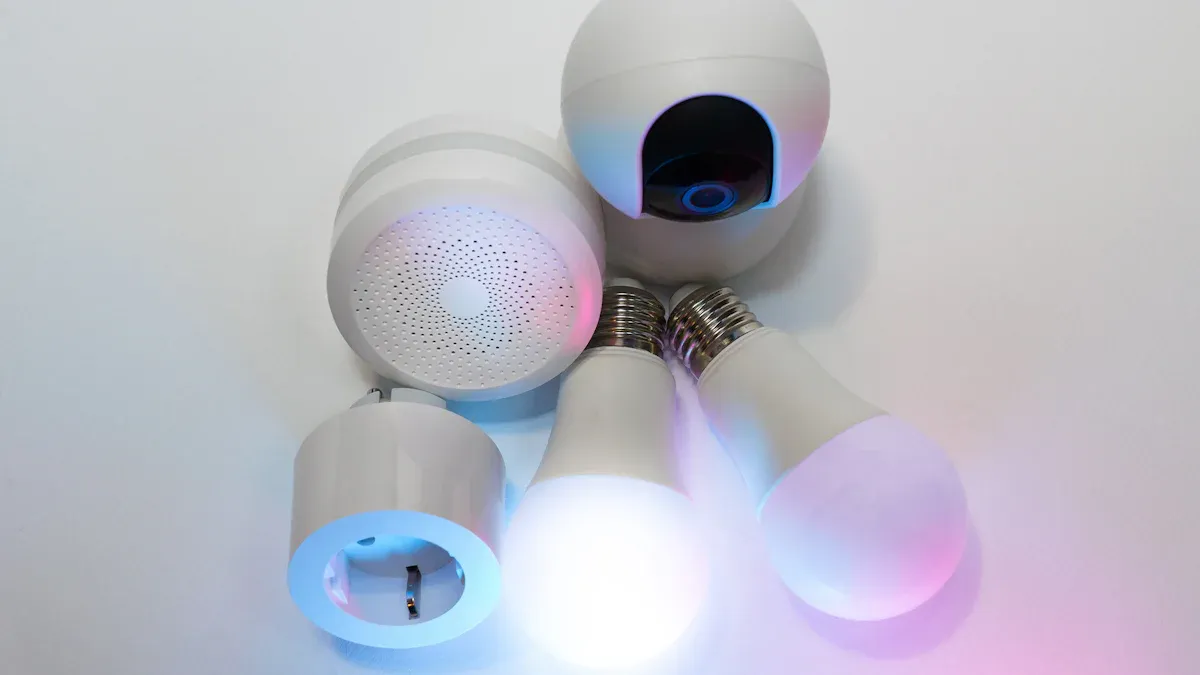
Smart lighting systems consist of several essential components that work together to create an efficient and user-friendly experience. Here’s a breakdown of the main parts:
Component Type | Description |
|---|---|
Motion Detector | Senses motion to determine occupancy and includes a timer for inactivity. |
Electronic Control Unit | Activates the switch or relay based on signals from the motion detector. |
Switch/Relay | Controls the power to the lighting based on the signals received from the control unit. |
Sensor Types | Includes passive infrared, ultrasonic, and hybrid sensors for different lighting applications. |
In addition to these components, smart switches enhance control over your lighting. They allow you to use voice commands, app control, and motion sensors. Installation typically requires a neutral wire, so hiring an electrician is often best.
Connectivity Options
Connectivity plays a crucial role in how smart lighting technology operates. You can choose between wired and wireless systems, depending on your needs. Here are some common connectivity options:
Connectivity Option | Range (Indoor) | Reliability | Integration Capabilities |
|---|---|---|---|
ZigBee | 35 to 70 feet | High (mesh networking) | Moderate (requires hub for some features) |
Z-Wave | 30 feet | Moderate (limited hops) | Moderate (requires hub) |
HomeKit | Varies (Wi-Fi/Bluetooth) | High (depends on method) | High (leverages Apple devices) |
Each option offers unique benefits. For instance, ZigBee provides a robust mesh network, while HomeKit integrates seamlessly with Apple devices. Choosing the right connectivity option enhances your experience and ensures your smart lighting systems function effectively.
Energy Efficiency Benefits

Smart lighting systems significantly enhance energy efficiency in your home. They achieve this through features like automated scheduling and motion sensors, which help you save both energy and money.
Automated Scheduling
Automated scheduling allows you to set your lights to turn on and off according to your daily routine. This feature ensures that lights only operate when you need them. Here are some key benefits of automated scheduling:
Aligns lighting with your daily activities, so lights are on only when necessary.
Gradually brightens or dims lights, creating a comfortable atmosphere while conserving energy.
Prevents lights from remaining on unnecessarily, leading to significant energy savings.
In fact, smart lighting systems can save more than 50% of electric lighting energy consumption compared to traditional systems. For example, a supermarket chain in San Antonio achieved a 38% reduction in monthly utility bills after upgrading to LED lighting across over 100 stores. This change saved approximately 9,632.74 kWh annually per location.
Motion Sensors
Motion sensors play a crucial role in optimizing energy use. They detect occupancy and adjust lighting accordingly. Here’s how they work:
Sensors detect motion using technologies like passive infrared or ultrasonic.
Lights activate when someone enters a room and turn off when the room is empty.
This automatic management ensures lights are only on when needed, enhancing convenience and energy efficiency.
The table below illustrates the energy savings achieved through motion sensors in various areas:
Area | Traditional Lighting (hrs/day) | With Sensor Lighting | Energy Saved |
|---|---|---|---|
Bathroom | 3 hrs | 15 mins | ~90% |
Parking Area | 12 hrs | 2 hrs | ~83% |
Corridor | 5 hrs | 1 hr | ~80% |
By implementing smart lighting systems with motion sensors, you can significantly reduce your energy consumption. These systems not only lower your electricity bills but also contribute to a more sustainable environment.
Smart Lighting and Home Security
Smart lighting systems play a vital role in enhancing your home security. They provide automation that can deter intruders and create a safer environment for you and your family.
Motion Detection
Motion detection is a key feature of smart lighting systems. When these systems sense movement, they trigger lights to illuminate the area. This sudden burst of light can discourage unauthorized entry. Here are some benefits of motion detection in smart lighting:
Lights activate when movement is sensed, making it difficult for intruders to operate unnoticed.
Real-time alerts notify you of any unusual activity, allowing for quick responses.
Motion sensor lights improve convenience and safety by eliminating the need for manual switches.
Integrating smart lighting with your existing security features can further enhance protection. For example, you can set up dynamic lighting that adjusts based on unusual activity. This integration can include AI-driven video analytics that trigger lights when specific objects, like people or unfamiliar vehicles, are detected. Custom lighting automation can also create signals that deter intruders, making your home less appealing to potential threats.
Remote Control Features
Remote control features in smart lighting systems allow you to manage your home’s lighting from anywhere. This capability enhances your security management significantly. Here’s a table summarizing the benefits of remote control features:
Feature | Benefit |
|---|---|
Remote Access | Control home lighting from anywhere using smartphone apps, enhancing security management. |
Illusion of Occupancy | Mimics presence at home by turning lights on/off, deterring potential intruders. |
Scheduled Lighting | Automates light patterns to simulate occupancy, providing peace of mind for travelers. |
Motion Sensors | Integrates with security features to illuminate areas upon detecting movement. |
Energy Efficiency | Adjusts lighting based on day/night, reducing energy costs while maintaining security. |
Automated lighting systems can illuminate dark areas, making it harder for intruders to approach unnoticed. You can strategically place lights around entry points to create a secure environment. The ability to control lighting remotely alleviates worries about leaving lights on when you are away.
Integrating smart lighting with home automation platforms enhances security features like scheduling and simulating occupancy. You can create timers that mimic your daily activities, such as turning lights on and off at specific times. Randomized patterns in your lighting schedules can further obscure whether your home is empty, making it less attractive to potential intruders.
By adopting smart lighting systems, you not only improve your home security but also enjoy the convenience of managing your lighting from anywhere.
Smart lighting systems offer you significant benefits for both energy savings and enhanced security. By utilizing automated controls, you can adjust lighting based on occupancy and ambient light, which reduces energy waste. Choosing energy-efficient LED bulbs further lowers your energy costs. Additionally, smart lighting enhances your home’s safety through features like motion detection and remote access.
Consider implementing these smart solutions in your home. They not only create a more efficient environment but also provide peace of mind. Embrace the future of home technology for a smarter, safer living space.
FAQ
What are smart lighting systems?
Smart lighting systems use technology to control your home’s lighting. You can manage them through apps, voice commands, or sensors. These systems improve energy efficiency and enhance security.
How do motion sensors work in smart lighting?
Motion sensors detect movement in a room. When they sense activity, they automatically turn on the lights. This feature saves energy by ensuring lights only operate when needed.
Can I control smart lighting remotely?
Yes! You can control your smart lighting from anywhere using a smartphone app. This feature allows you to turn lights on or off, even when you are away from home.
Are smart lighting systems easy to install?
Most smart lighting systems are designed for easy installation. However, some may require a neutral wire or professional help. Always check the installation requirements before purchasing.
Do smart lighting systems save money on energy bills?
Absolutely! Smart lighting systems can reduce energy consumption by over 50%. Features like automated scheduling and motion sensors help you save money on your electricity bills.